.png)


Breast Cancer:
Information, Support and What to Do Next
Understanding breast cancer
Breast cancer is cancer that starts in the breast. It is the most common cancer affecting women in the UK, but breast cancer is not one single disease. There are different types and stages, and treatment and outlook can vary from person to person.
The good news is that breast cancer survival has improved significantly over time. Finding breast cancer early can make treatment more likely to be successful, which is why breast awareness, attending breast screening when invited and getting unusual changes checked are so important.
If you are worried about a change in your breast or have symptoms, do not wait for your next routine screening appointment. Contact your GP.
Breast cancer facts in the UK
-
Around 59,400 new cases of breast cancer are diagnosed in the UK each year.
-
Breast cancer is the most common cancer in the UK.
-
Around 1 in 7 females born in 1961 in the UK are estimated to be diagnosed with breast cancer during their lifetime.
-
Breast cancer can affect people of different ages, although the risk generally increases with age.
-
Breast screening can sometimes find breast cancer before it is large enough to feel or see.
-
Breast cancer survival has improved considerably over the last 50 years.
These figures describe populations, not individuals. Your personal risk depends on a combination of factors, including your age, family history, genetics, lifestyle and other health factors.
What causes breast cancer?
There is usually no single cause of breast cancer. Cancer develops when cells grow and divide in an abnormal way. In many cases, it is not possible to say exactly why a particular person developed breast cancer.
Some factors are known to increase the chance of developing breast cancer. These are often called risk factors rather than direct causes.
Factors that can increase risk include:
Age
The risk of breast cancer generally increases as you get older.
Family history and inherited genes
Having close relatives who have had breast or ovarian cancer can increase your risk. Some people inherit gene changes, such as changes in BRCA1, BRCA2 or other genes, that can increase the likelihood of developing breast cancer.
If breast or ovarian cancer runs in your family, speak to your GP. You may be referred for specialist assessment or genetic testing.
Hormonal and reproductive factors
Some factors that affect lifetime exposure to hormones may influence breast cancer risk. These can include starting periods at a young age, going through menopause later in life, not having children or having a first child later in life.
Some forms of hormonal contraception and hormone replacement therapy can slightly increase breast cancer risk. For many people, the benefits of these treatments still outweigh the risks, so speak to a healthcare professional before making changes to prescribed medication.
Alcohol
Drinking alcohol can increase the risk of breast cancer. Reducing alcohol intake can help lower your risk.
Being overweight after the menopause
Being overweight or living with obesity after the menopause is associated with an increased risk of breast cancer.
Smoking and other lifestyle factors
Smoking is linked with an increased risk of several cancers and may also contribute to breast cancer risk.
Not every risk factor can be changed, and developing breast cancer is not your fault. Some people who have several risk factors never develop breast cancer, while others develop it without any obvious risk factors.
Common signs and symptoms of breast cancer
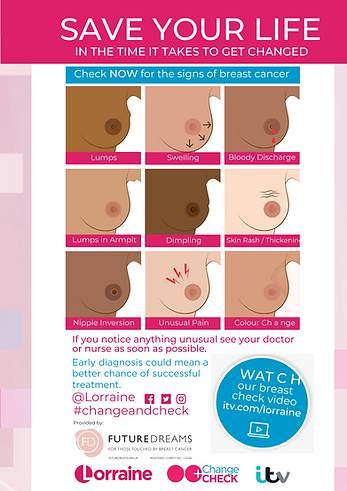
Breast cancer can cause different changes in the breast, chest or armpit. It is important to know what is normal for you and to look out for changes that are unusual or new.
Possible symptoms include:
-
A lump or swelling in the breast, chest or armpit
-
A change in the size or shape of one or both breasts
-
Dimpling, puckering or changes to the skin of the breast
-
Redness or a change in the appearance of the skin
-
A change in the appearance or shape of the nipple
-
A nipple that becomes inverted or turns inwards
-
A rash or skin change on or around the nipple
-
Unusual nipple discharge, particularly if it contains blood
-
Persistent changes in the breast or armpit
-
Breast or armpit pain, particularly when accompanied by other changes
Breast pain on its own is not usually a sign of breast cancer, and many breast lumps and changes are caused by conditions that are not cancer. However, any new or unusual change should be checked by a healthcare professional.
Remember: breast cancer does not always cause a lump
A change in the skin, nipple or shape of the breast can also be a symptom. You do not need to wait until you find a lump before seeking medical advice.
What should you do if you think you may have breast cancer?
1. Arrange medical advice
If you notice a new or unusual change in your breast, chest or armpit, contact your GP. Explain what you have noticed and how long it has been present.
If you have been invited for routine breast screening, attending your appointment is important. Screening can detect some breast cancers before symptoms appear.
However, do not wait for a screening appointment if you already have symptoms. Contact your GP as soon as possible.
2. Try not to panic
A breast lump or other breast change does not automatically mean you have cancer. Many breast changes are caused by non-cancerous conditions.
The only way to know what is causing a change is to have it properly assessed.
3. What happens at the GP?
Your GP may:
-
Ask about your symptoms
-
Ask about your personal and family medical history
-
Examine your breasts, chest and armpits
-
Refer you to a specialist breast clinic if further investigation is needed
Being referred to a breast clinic does not mean that you have breast cancer. Many people referred for further tests are not diagnosed with cancer.
What happens if you do have breast cancer?
If tests confirm breast cancer, your specialist team will explain what type of cancer you have and what the results mean.
Your treatment plan will depend on factors including:
-
The type of breast cancer
-
The size and location of the cancer
-
Whether cancer has spread to lymph nodes or other parts of the body
-
The stage and grade of the cancer
-
Whether the cancer cells have hormone or HER2 receptors
-
Your general health and personal circumstances
Tests and diagnosis
At a breast clinic, you may have some or all of the following:
-
A breast examination
-
A mammogram
-
An ultrasound scan
-
A biopsy, where a small sample of tissue is taken and examined
-
These tests help doctors understand whether cancer is present and, if it is, which treatment is most appropriate.
Common breast cancer treatments
Treatment may include one or more of the following:
Surgery
Surgery may involve removing the cancer from the breast, known as breast-conserving surgery, or removing the whole breast, known as a mastectomy. Surgery may also involve examining or removing lymph nodes.
Radiotherapy
Radiotherapy uses high-energy radiation to destroy cancer cells. It may be recommended after surgery or in other circumstances.
Chemotherapy
Chemotherapy uses medicines to destroy cancer cells or stop them from growing.
Hormone therapy
Some breast cancers are affected by hormones such as oestrogen. Hormone therapy can help reduce the chance of these cancers growing or returning.
Targeted treatments and immunotherapy
Some breast cancers have specific characteristics that can be treated with targeted medicines or immunotherapy.
Your specialist team will discuss the benefits, possible side effects and alternatives to treatment with you. You should have the opportunity to ask questions and be involved in decisions about your care.
Breast cancer screening in the UK
The NHS Breast Screening Programme routinely invites eligible women for mammograms.
In England, women registered with a GP as female are generally invited for screening from around age 50 to 71, usually every three years. Women aged 71 and over can continue to request screening every three years.
Screening arrangements and eligibility can differ across the UK, so check the guidance for where you live.
Screening is important because it can detect some cancers before they cause symptoms. However, no screening test can find every cancer.
If you notice a change in your breast, do not wait for your next screening appointment. Contact your GP.
Breast cancer survival rates
Breast cancer survival rates have improved substantially, particularly when cancer is diagnosed at an early stage.
Current UK survival statistics indicate that, overall:
-
More than 95% of women survive breast cancer for at least one year after diagnosis.
-
Almost 90% survive for at least five years.
-
More than 75% survive for at least ten years.
Survival varies considerably depending on the stage at diagnosis and other factors.
For breast cancer diagnosed in England between 2018 and 2022:
-
Stage 1: Almost 100% of women survive for five years or more.
-
Stage 2: Around 90% survive for five years or more.
-
Stage 3: Around 75% survive for five years or more.
-
Stage 4: More than 30% survive for five years or more.
These figures are population statistics and cannot predict exactly what will happen to one individual. Your healthcare team can give you more personalised information based on your diagnosis and treatment.
A five-year survival statistic does not mean someone will only live for five years. Many people live much longer.
Looking after your breast health
There are simple steps you can take to stay aware of your breast health:
Know what is normal for you
Become familiar with how your breasts normally look and feel. Everyone's breasts are different, and they can change naturally over time.
Attend breast screening when invited
Screening can find some breast cancers before they can be felt or seen.
Report unusual changes
If you notice a new or unusual change, contact your GP. Do not wait for a screening appointment.
Know your family history
If several close relatives have had breast or ovarian cancer, discuss this with your GP.
Look after your overall health
Not all breast cancers can be prevented, but maintaining a healthy weight, being physically active, avoiding smoking and limiting alcohol can help reduce the risk of several cancers, including breast cancer.
If you are worried, you are not alone
Being concerned about a breast change can feel frightening. Try to remember that most breast changes are not cancer, but it is always important to get anything unusual checked.
The best next step is to contact your GP if you have symptoms or a change that is not normal for you. If you are due or eligible for routine breast screening, arrange or attend your screening appointment.
Getting information and seeking help early can make a real difference.
Important
This page is for general information and is not a substitute for medical advice, diagnosis or treatment. If you are worried about a breast change or symptoms, speak to a GP or another qualified healthcare professional.
Future Dreams has partnered with ITV’s The Lorraine Show on the Change+Check campaign to raise awareness of the signs and symptoms of breast cancer.
Informative Change+Check leaflets and stickers (ideal for the back of toilet doors) can be downloaded or ordered free of charge through the following link.
If you would like to order greater quantities than listed below please email saoirse@futuredreams.org.uk.